
By: Azeez Abdulrahman Adewale (Borguh)
Introduction
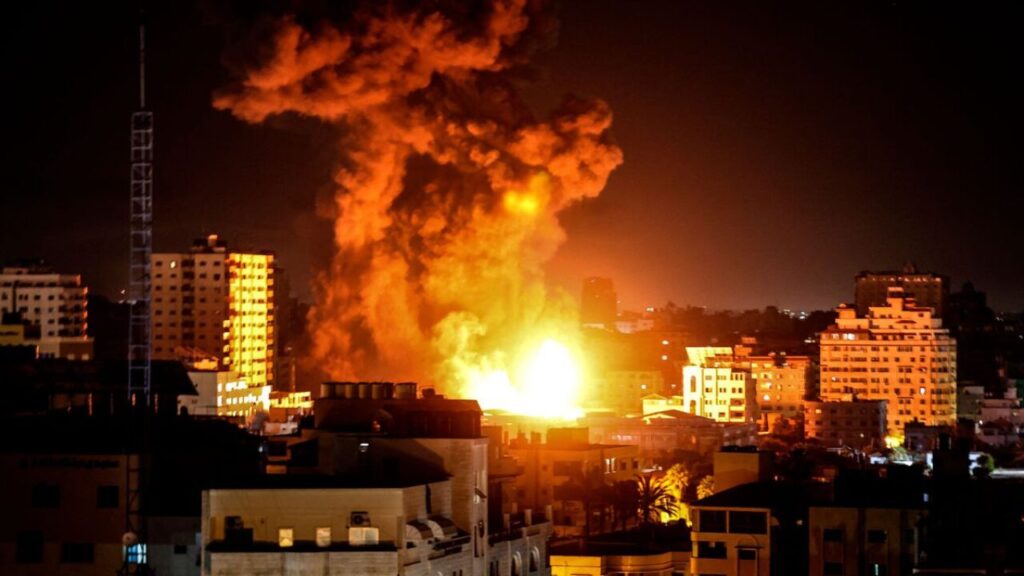
In the blessed land of Palestine, a story of resilience and hope has unfolded for generations. A land revered by Muslims, Christians, and Jews alike, Palestine has been a beacon of faith, culture, and diversity. Yet, for over seven decades, the Palestinian people have faced unimaginable struggles, including political oppression, displacement, occupation, apartheid, social and economic hardships, and significant humanitarian crises. In this article, we will delve into the historical context of the Palestinian struggle, exploring the roots of the conflict, the impact of colonialism and imperialism, and the ongoing fight for justice and self-determination.
The Palestinian struggle is a profound and enduring issue that resonates deeply within the Muslim community worldwide. This struggle is not just a political conflict but a fight for justice, dignity, and the right to live freely on their ancestral land. As Muslims, it is crucial to understand the complexities of this issue, to stand in solidarity with our brothers and sisters in Palestine, and to advocate for a just and peaceful resolution. This struggle is a complex and multifaceted issue, encompassing political, social, economic, and humanitarian challenges, which have been exacerbated by historical events, Israeli-Palestinian conflicts, and ongoing occupation.
Historical Context
Early History of Palestine and Jewish Immigration
Palestine has long been a focal point of cultural and religious significance. In the late 19th century, the rise of Zionism marked a significant shift. The Zionist movement, spearheaded by figures such as Theodor Herzl, sought to establish a Jewish homeland in Palestine. Herzl’s vision, articulated in his influential work “The Jewish State” (1), advocated for the mass immigration of Jews to Palestine. This movement gained momentum, leading to increased Jewish immigration, majorly from Europe, and the purchase of land, often resulting in the displacement of Palestinian Arab farmers (2). The underlying tensions between the indigenous Arab population and the new Jewish immigrants set the stage for future conflicts.
The United Nations Partition Plan
The roots of the conflict were further complicated by the United Nations Partition Plan of 1947 (3). This plan proposed the division of Palestine into separate Jewish and Arab states, with Jerusalem as an international city (3). While the Jewish leadership accepted the plan, the Arab states and Palestinian leaders rejected it, seeing it as unjust and a violation of their right to self-determination. The plan allocated 55% of the territory to the Jewish state, despite Jews making up only one-third of the population and owning less than 10% of the land (2) . This led to immediate violence and set the stage for the 1948 war, further entrenching the divisions between Jews and Arabs.
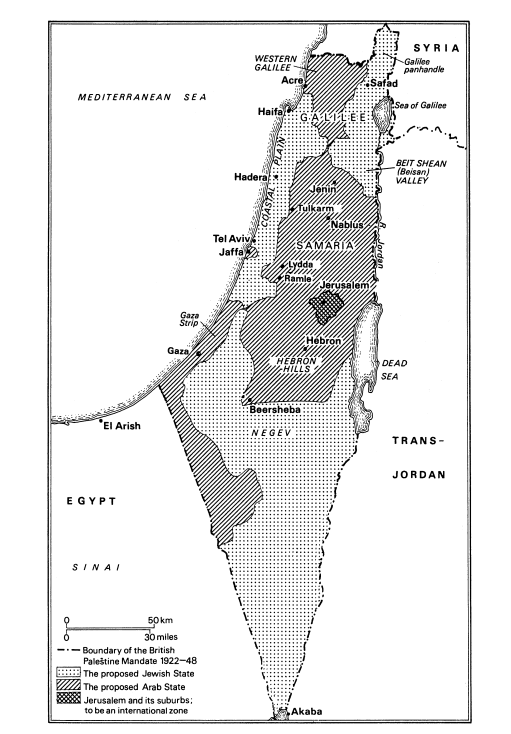
(Based on Martin Gilbert, The Arab–Israeli Conflict, its History in Maps, new edn,London, Weidenfeld & Nicolson, 1976)
[Include a diagram on the Arab settlements abandoned in 1948–9 and date and main causes of
Abandonment (Based on Carta’s Historical Atlas of Israel, The First Years 1948–61, ed. by Jehuda
Wallach and Moshe Lissak, Jerusalem, Carta, 1978, p. 139)] –
Check – Map 2 in – Morris – The Birth of the Palestinian Refugee Problem Revisited (2004)
Impact of the 1948 Arab-Israeli War (Nakba)
The 1948 Arab-Israeli War, a pivotal event in Palestinian history, resulted in what is known as the Nakba, or “catastrophe.” Over 700,000 Palestinians were forcibly displaced from their homes, and hundreds of villages were destroyed, leading to a significant refugee crisis that persists to this day (2). This displacement was exacerbated by actions of Jewish paramilitary groups like the Haganah and Lehi (4). These groups, which some consider terrorist organizations due to their tactics, including the killing of British diplomats and Count Folke Bernadotte, played a crucial role in the establishment of the state of Israel . The war resulted in the declaration of the state of Israel, but at the cost of massive displacement of about 700,000 Palestinians from their homes and continued suffering till date.
Buildup to the Six-Day War
The 1967 Six-Day War was another significant event that reshaped the Middle East. The buildup to this war involved increasing tensions between Israel and its Arab neighbors, including Egypt, Jordan, and Syria. The war was precipitated by a series of provocations and military maneuvers, including Egypt’s blockade of the Straits of Tiran and the mobilization of Egyptian, Syrian, and Jordanian forces along Israel’s borders. In a preemptive strike, Israel launched attacks against Egyptian airfields, quickly gaining air superiority (5). The conflict resulted in Israel capturing the West Bank, Gaza Strip, East Jerusalem, the Golan Heights, and the Sinai Peninsula. This not only changed the geographical and political landscape of the region but also led to the ongoing occupation of Palestinian territories, exacerbating the humanitarian and political crisis.
From Then to Now
The aftermath of the Six-Day War has been a period of continued conflict and struggle for the Palestinian people. The Israeli occupation of the West Bank and Gaza Strip has led to severe restrictions on movement, economic hardship, and widespread human rights abuses. Israeli settlements, deemed illegal under international law, have expanded, further fragmenting Palestinian territories and diminishing hopes for a viable Palestinian state. The actions of Israeli paramilitary groups like Haganah and Lehi during the 1948 war set a precedent for the use of force and displacement that has continued to influence the region’s dynamics.
Understanding this historical context is essential for grasping the current realities faced by Palestinians. The roots of the issue lie in the early Zionist movement and the subsequent wars and conflicts that have shaped the region. For Muslim students, recognizing these historical injustices and the complex interplay of political, social, and economic factors is crucial in advocating for a just and peaceful resolution to the Palestinian struggle.
Sponsored Ad

Political Struggles
The political landscape of the Israeli-Palestinian conflict is marked by numerous attempts at peace, ongoing division among Palestinian factions, and complex legal issues. Understanding these dynamics is crucial for comprehending the broader struggle of the Palestinian people.
Israeli-Palestinian Peace Process
The quest for peace between Israelis and Palestinians has been a long and arduous journey, marked by key agreements and summits that aimed to resolve the conflict. Two significant milestones in this process are the Oslo Accords and the Camp David Summit.
Oslo Accords (1993): The Oslo Accords were a landmark moment in the Israeli-Palestinian peace process. These agreements, facilitated by Norway and signed in Washington, D.C., established a framework for the future governance of Palestinian territories and initiated the creation of the Palestinian Authority (PA). The accords aimed to achieve a two-state solution, with Palestinians gaining limited self-governance in parts of the West Bank and Gaza Strip. Despite initial optimism, the process stalled due to ongoing violence and mutual distrust .
Camp David Summit (2000): Another crucial moment was the Camp David Summit, where U.S. President Bill Clinton hosted Israeli Prime Minister Ehud Barak and Palestinian Authority Chairman Yasser Arafat. The summit aimed to address key issues such as borders, the status of Jerusalem, and Palestinian refugees. Unfortunately, the summit ended without an agreement, and subsequent violence in the Second Intifada further dashed hopes for peace.
Current Political Situation: Divide between Fatah and Hamas
The Palestinian political scene is deeply divided between two main factions: Fatah and Hamas. This division has significant implications for the Palestinian struggle for statehood and self-determination.
Fatah: Fatah, led by Mahmoud Abbas, dominates the Palestinian Authority and is based in the West Bank. It is considered more moderate and has engaged in numerous peace negotiations with Israel. However, its leadership has been criticized for corruption and ineffectiveness in improving the lives of Palestinians .
Hamas: Hamas, which governs the Gaza Strip, is an Islamist organization that opposes Israel’s existence and has been involved in numerous conflicts with Israeli forces. It is designated as a terrorist organization by several countries due to its attacks on civilians. The ideological and political divide between Fatah and Hamas has led to a fragmented Palestinian polity, making it challenging to present a united front in peace negotiations and governance .
Legal Issues and Political Dynamics
The legal landscape of the Israeli-Palestinian conflict is complex and contentious, involving issues of international law, human rights, and sovereignty.
Settlements: Israeli settlements in the West Bank are considered illegal under international law, particularly the Fourth Geneva Convention, which prohibits an occupying power from transferring its civilian population into the territory it occupies. Despite this, settlement expansion has continued, exacerbating tensions and complicating the possibility of a two-state solution .
Occupation and Human Rights: The ongoing Israeli occupation of Palestinian territories has led to numerous human rights violations. Reports by organizations like Human Rights Watch highlight issues such as restrictions on movement, arbitrary detentions, and the demolition of Palestinian homes. These actions have severe humanitarian impacts and hinder the prospects for peace and stability.
Palestinians’ Demands: Right of Return: At the heart of the Palestinian struggle is the demand for the right of return. Palestinians displaced during the 1948 Nakba and subsequent conflicts seek the right to return to their ancestral homes and properties. This demand is enshrined in international law and numerous UN resolutions, including General Assembly Resolution 194. Despite this, Israel has consistently rejected the right of return, exacerbating the refugee crisis and perpetuating Palestinian dispossession.
Propaganda and Double Standards: The Israeli-Palestinian conflict is often marred by propaganda and double standards in international reactions. Israel’s powerful public relations machinery often portrays its actions as defensive measures against terrorism[1] , while Palestinian resistance is labeled as terrorism. This narrative overlooks the root causes of the conflict, including the ongoing occupation and settlement expansion. Moreover, double standards in international reactions, such as swift condemnation of other conflicts compared to leniency towards Israel, highlight the need for a more equitable approach to the Palestinian issue. The political struggles of the Palestinian people are deeply intertwined with their quest for self-determination and peace. The division between Fatah and Hamas, ongoing legal issues, and the failure of multiple peace processes have created a complex and often bleak landscape. However, understanding these dynamics is crucial for supporting efforts toward a just and lasting resolution to the conflict. For Muslims, recognizing these political challenges is essential for advocating effectively for Palestinian rights and justice.
By: Azeez Abdulrahman Adewale (Borguh)
To read Episode 2, Click Here
To read Episode 3, Click Here



This is heartbreaking 💔
But I believe Allah help is near.
May Allah liberate them and ease their affairs.
Aameen Yaa Allah.🤲