
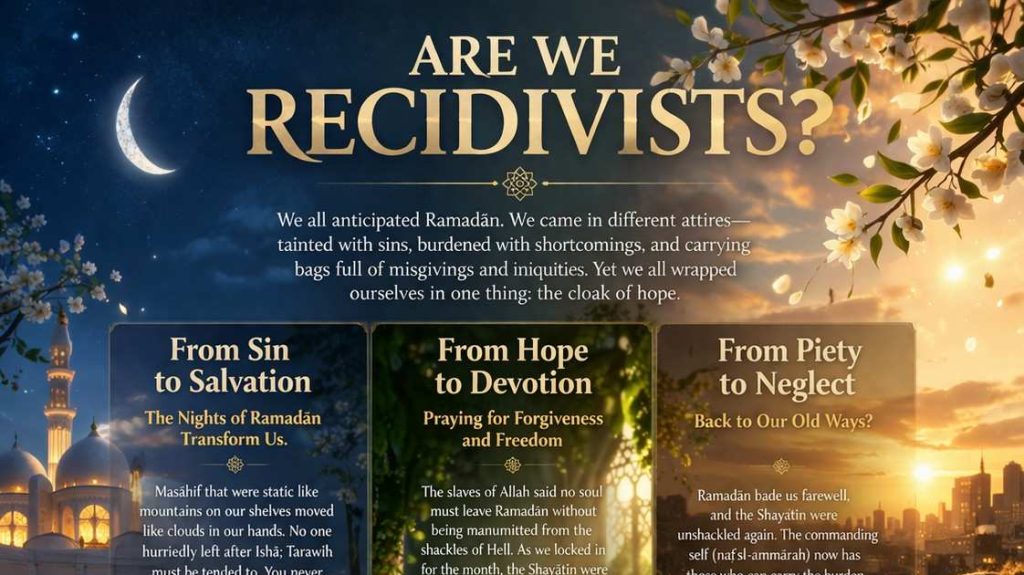
We all anticipated Ramadān.
That night, the masjid had visitors who had come to welcome the greatest visitor—Ramadān. The birds would be eager to perch and nest on our heads as we sat patiently, waiting for the crescent to grace the night sky on the 29th of Shaʿbān. There must be positive moonsighting reports, some hearts mumbled, and you could perceive it on their faces.
Everyone came in different attires, mostly tainted, stained, patched with sins, and burdened are the wearers. Whereas some came with their bags stuffed with misgivings, shortcomings, and iniquities—an unrejectable gift for Ramadān. Everyone did. We all did; however, aside from the attires and the bags, we all had one thing in common: the cloak of hope we wrapped around ourselves. Some, large; some, extra large.
We whispered to each other, Ramadān is like the safe and cool fire that burnt Ibrāhīm (Alaihis-salām); it must burn our shortcomings so that we come out with nothing but sins removed. Some looked keenly and responded, the cool water Ayyūb (Alaihis-salām) washed and drank from fits better, as he came out restored and rejuvenated, as we would want to after Ramadān. Well, both are true; Allāh’s Mercy is unlimited, and everyone is entitled.
The slaves of Allah said no soul must leave Ramadān without being manumitted from the shackles of Hell. As we pledged to lock in for the month, the Shayātīn were locked in and shackled. The blame for our shortfalls now rests solely on our souls. No escape for the commanding self (nafs al-ammārah); no one to accuse for acting on its caprice, and no excuse either.
In our masjid, masāhif that had been static like mountains on our shelves moved like clouds when the hands of men touched them. No one dared to leave hurriedly after Ishā; the beds can wait, Tarāwīh must be tended to, they said. I don’t think you ever skipped or missed the Fajr prayer. Throughout the month, the masjid was never bereft of hundreds waiting to receive the Maghrib prayer. I almost got jealous of Maghrib and those longing eyes that anticipated the sunset that heralded its arrival. It was as if sunset had never been, and Maghrib, before, had never been prayed. Remember the joyous faces at ifṭār and the sleepy eyes at suḥūr?
The last ten nights. The last ten nights among which the majestic night is singled out. The Night of Majesty is certainly better than a thousand months. We retreated to the masjid devoutly. No one should deny himself of the night if Allāh had granted him the opportunity to witness the month. The slaves of Allah said no soul must leave Ramadān without being manumitted from the shackles of Hell.
Finally, Ramadān bade us farewell on Thursday night, and what happens on Friday and beyond would determine if we had fared well or not. The Shayātīn were unshackled and out again. The commanding self (nafs al-ammārah) now has those who can carry the burden of its caprices. The masāhif took their places on the shelves, again static. Well, Maghrib came on Friday evening, and the hundreds in our masjid and those longing eyes were nowhere to be found.
Did everyone go back to those attires when they were supposed to be clad in their best?
Has the soul retraced its steps to where it was the morning before “that night”?
Are we recidivists?
Brought to you by
Islamic Affairs Board, MSSN OAU (IAB)